7 Best AI Customer Service Agents for Subscription Cancellation Flows (2026)
A cancellation flow handled by hand costs about $1,000 a month at 500 requests. We scored 7 AI agents that run it in a ticket or chat, from $283 a month.
Summarize with AI
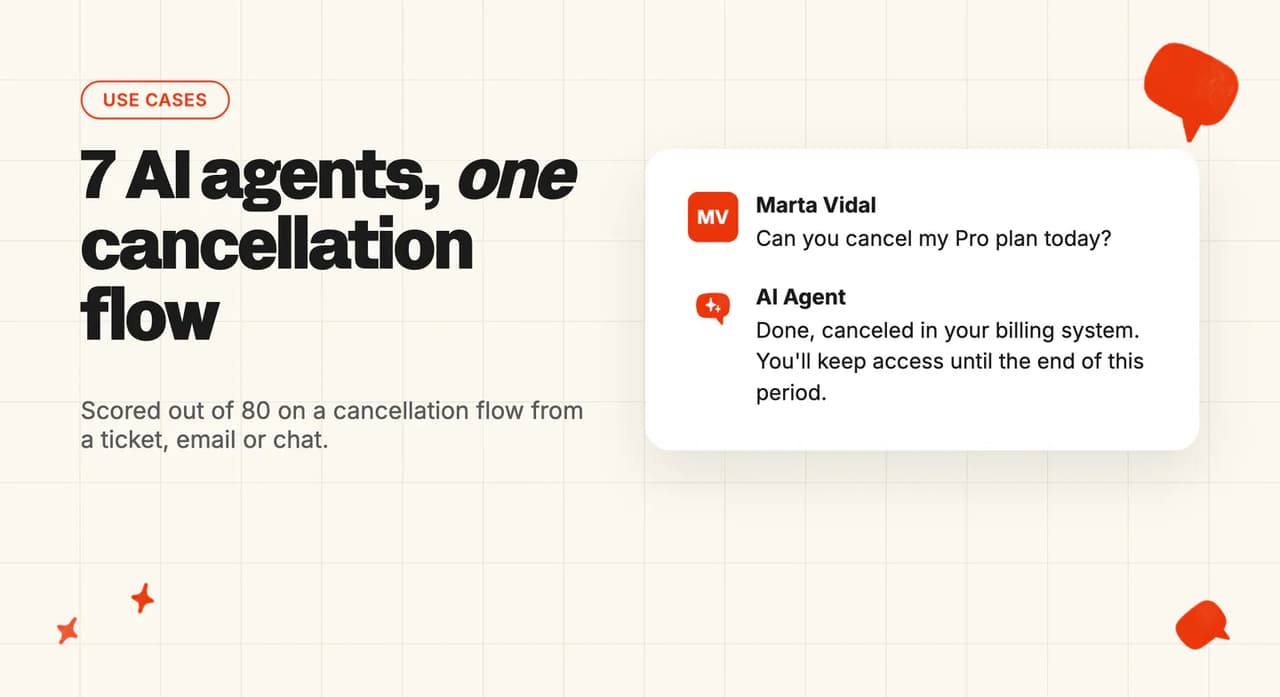
You can get a cancellation request wrong in two directions. Make leaving hard and the customer disputes the next charge with their bank, so you lose them anyway. Wave every request through without a word and you lose the reason they're leaving, along with any chance of keeping the ones who only wanted a break or a cheaper plan.
A cancellation flow is the set of steps between a customer saying "I want to cancel" and a confirmed cancellation, and it's usually built as a screen inside an app or a customer portal. For plenty of businesses, the request turns up as a ticket, an email or a chat, and this post covers that version. For the wider mix of subscription tickets, our guide to AI customer service for subscription businesses goes further.
I'm Mike, co-founder of My AskAI. We help 200+ ecommerce and SaaS businesses run AI customer service inside the helpdesk they already use, so I'm not a neutral party, and My AskAI is one of the seven tools below.
I've priced every tool below against one figure: handling 500 cancellation requests a month by hand costs a team about $1,000. The closest customer story is RecruitCRM's: its AI answers from each customer's own plan and account data, and upgrade and cancellation tickets go to the team by rule.
What does automating a subscription cancellation flow actually require?
I scored every tool on these six jobs, from reading the customer's plan to handing the hard cases to a person.
1. It can see the customer's plan and billing
Before the AI can do anything useful, it needs the customer's live subscription:
- which plan they're on and what they pay
- when the next charge is due
- whether they're monthly or on an annual term
- whether they hold more than one subscription
For a subscription box, it also needs to know whether this month's box has already been packed.
Without that, the AI can only recite your cancellation policy, and the customer still waits for a person to look them up. That lookup is the slow part of most cancellation tickets.
2. It asks why, and records the answer
A customer who is leaving will usually tell you why if you ask one short question. Good cancellation flows match the offer to the answer: a pause for "not the right time", a discount for "too expensive".
The answer also has to land somewhere your team can report on (a tag, a field on the ticket, or the billing tool's own cancellation reason).
3. It makes one fair offer, then takes no for an answer
Most subscription businesses want a chance to keep the customer, and that's fine inside rules you set: who qualifies for a pause, a lower-priced plan or a discount, and how often. The AI makes the offer that fits the reason, once. If the customer still says no, it cancels.
I check two things here: can you decide which offer goes to which customer, and can you stop the AI from pitching a second time?
4. It cancels it in the billing system
The subscription has to stop in the system that charges the customer, at the moment your policy says: straight away, or at the end of the period they've paid for. Test this job hardest in a demo, because a chat reply saying "done" means nothing if the next charge still goes out.
App-store subscriptions need their own path. A customer who subscribed through the App Store usually cancels in their own device settings, so the AI's job is to tell them exactly where to go. On Google Play, your team can cancel a user's subscription from the Play Console, and canceling there doesn't issue a refund.
Ask every vendor where its AI can act on a subscription: which billing tools, which actions, and whether a teammate can approve first. Our roundup of AI for action-taking goes deeper on that side.
5. It tells the customer what happens next
The confirmation should answer the questions a customer asks straight after canceling: when the last charge was, when access or deliveries stop, what happens to their data or credit, and how to come back. On Google Play, for example, customers keep access for the time they've already paid for, and the AI should say so in plain words.
Your team should also be able to see afterwards exactly what the AI did and why, step by step. If the customer asks for money back, that's a refund request with its own rules, and our roundup of AI for refunds covers it.
6. It hands the hard cases to a person
Some cancellations should always reach a person:
- a disputed charge or chargeback
- a refund demand outside your policy
- a customer with two subscriptions who only wants to lose one
- anyone upset, and anyone who asks for a person
The AI should route those by topic rule, and a customer who asks for a person should get one, every time. The handover should also carry a summary of the conversation so far, so the customer doesn't have to explain everything again to someone new. Our roundup of AI for human handoff covers the mechanics in more depth.
How did I score these tools for subscription cancellations?
The eight criteria are the six jobs above, setup effort and monthly cost. Every score comes from the vendor's docs, product pages, pricing pages and published customer stories, and a tool gets credit on a job only for what those pages show.
Here are all eight, in priority order:
- Sees plan and billing - reads the customer's live plan, renewal date and recent charges
- Asks why and records it - asks for a reason once, in plain words, and saves it where your team can report on it
- One fair offer, then lets go - follows offer rules you set, once, and cancels if the answer is still no
- Cancels it in billing - stops the subscription in your billing or subscription tool, now or at period end
- Confirms what happens next - tells the customer the last charge and end of access, and shows your team what was done
- Hands hard cases to a person - routes disputes and upset customers by rule, with a summary, and a person is always one request away
- Setup effort - the time and people needed to go live, assuming your team uses AI to draft and test the cancellation steps
- Monthly cost at 500 cancellations - the lowest plan that covers that volume, billed monthly, including any add-on the AI needs
The 7 AI customer service agents for subscription cancellations at a glance
Here is how the seven tools scored, with the top mark in each row in bold:
| (scores out of 10) | Gorgias AI Agent | My AskAI | Intercom Fin | eesel AI | Fini | Sierra | Zendesk AI agents |
|---|---|---|---|---|---|---|---|
| Sees plan and billing | 8 | 8 | 8 | 8 | 8 | 7 | 7 |
| Asks why and records it | 8 | 6 | 5 | 7 | 6 | 6 | 5 |
| One fair offer, then lets go | 8 | 6 | 7 | 5 | 5 | 8 | 5 |
| Cancels it in billing | 7 | 7 | 8 | 8 | 9 | 7 | 7 |
| Confirms what happens next | 8 | 8 | 7 | 7 | 8 | 7 | 7 |
| Hands hard cases to a person | 9 | 9 | 8 | 6 | 7 | 8 | 7 |
| Setup effort | 7 | 6 | 6 | 6 | 6 | 4 | 5 |
| Monthly cost at 500 cancellations | 6 | 9 | 7 | 8 | 3 | 2 | 5 |
| Overall | 61 | 59 | 56 | 55 | 52 | 49 | 48 |
Same eight criteria, in plain words:
| Criterion | Gorgias AI Agent | My AskAI | Intercom Fin | eesel AI | Fini | Sierra | Zendesk AI agents |
|---|---|---|---|---|---|---|---|
| Sees plan and billing | Subscription, price, next charge | Live plan and billing data | Reads the user's plan | Invoices, payments and subscriptions | Plan and recent orders | Billing platform connected | Actions your admins build |
| Asks why and records it | Collects the reason | Reason step you write | No reason step shown | Reason saved for retention | Only if customer volunteers | Listens to concerns | No reason example shown |
| One fair offer, then lets go | Pause offered, no means no | Offer step you write | Cancel-or-pause template | Skip or cancel only | Cancel with no offer | Personalized offers you test | No offer example shown |
| Cancels it in billing | Recharge, Loop, Skio cancel | Cancels through your billing | Cancels in your billing | Cancel stops future billing | Cancel with effective date | Handles cancellation requests | Runs your action flows |
| Confirms what happens next | Confirmation email, action log | Echo explains every action | Teammate sign-off step | Activity page, approvals | Every action logged | Reasoning behind every action | Conversation logs show actions |
| Hands hard cases to a person | Always-on triggers, billing disputes | Topic rules, summary, frustration | Branches on plan cancellations | Written into instructions | Escalates with full context | Handoff with summary | Complex or sensitive cases |
| Setup effort | Live once Recharge connected | Developer connects billing once | Connectors your team builds | Simulation on past tickets | Live in 14 days | Singtel: under 10 weeks | Admins build each action |
| Monthly cost at 500 cancellations | $503 on Basic | About $283 on Pro | $495 at $0.99 an outcome | $299, 500 credits | $0.89 per resolved ticket, no plan price shown | No price shown | $950 in resolutions |
Gorgias AI Agent leads because its subscription actions run the whole cancellation conversation out of the box. It looks up the subscription, collects the reason, offers a pause and cancels in Recharge, Loop or Skio. It also hands over automatically when a customer gets angry, asks for a person or raises a sensitive topic, which adds up to the top or joint-top score on six of the eight rows. It needs a Shopify store connected, so it only fits Shopify subscription brands, and its cost is a 6 because automated interactions above the plan's allowance add up fast at 500 a month.
My AskAI is two points behind on 59, with the lowest monthly cost (9) and the joint-best handover (9), and it works inside Zendesk, Intercom, Freshdesk, Freshchat, Gorgias or HubSpot. We score 6 on asking why and on the offer, because you write both as steps in the cancellation Task.
Intercom Fin is third on 56 with a ready-made cancel-or-pause template, and eesel AI is close behind on 55: cheap and careful with approvals, but thinner on offers and handover. Fini's 9 on canceling in billing is the best in the set, and Sierra shares the top offer score with Gorgias, but Fini's pricing page gives no plan price and Sierra's pages show no price at all.
Where does cancellation flow automation go wrong?
I test for all three when cancellations are automated, and each one is easy to check in a vendor demo.
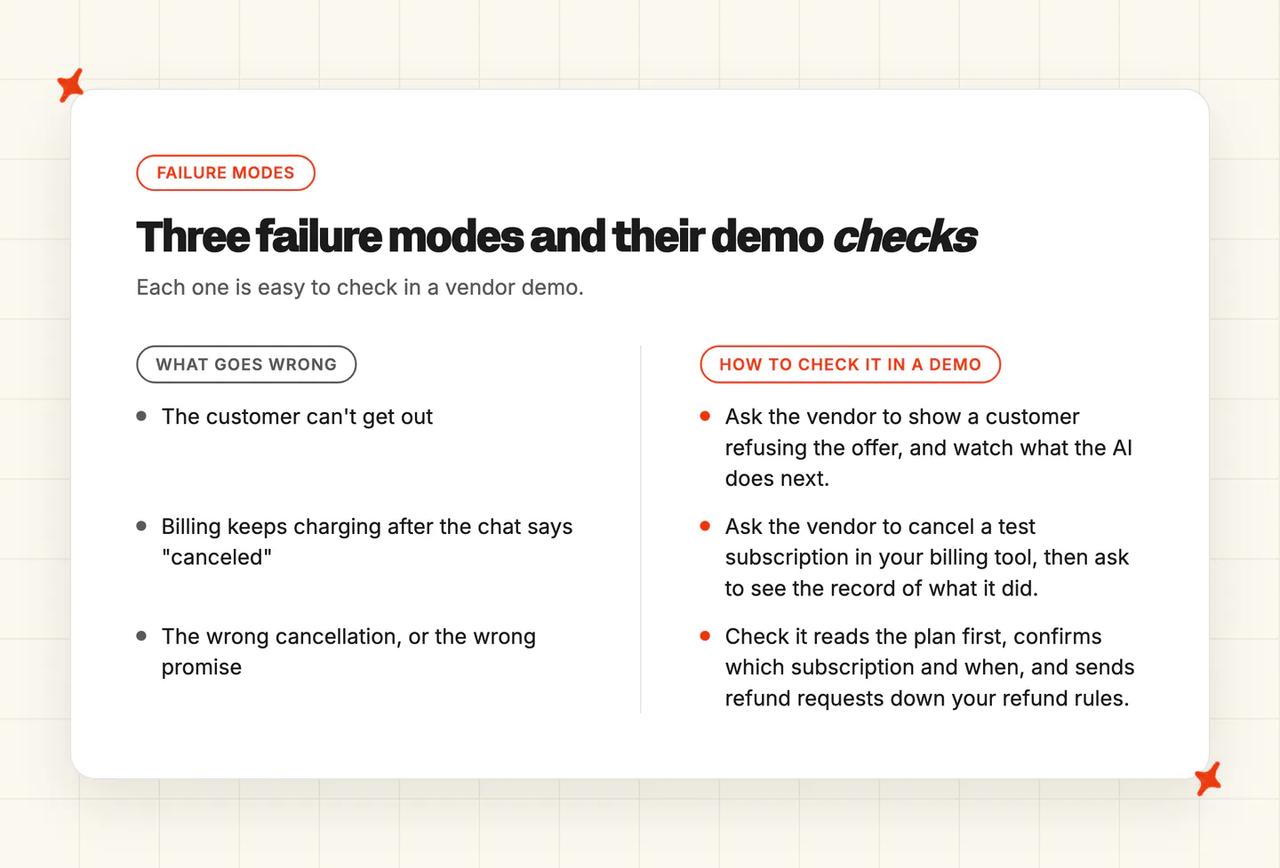
Failure mode 1: The customer can't get out
The AI repeats the offer, won't accept a second no, or has no route to a person, so the customer ends up disputing the charge with their bank instead. It happens with people too. A founder who tested 50 SaaS cancellation flows found four that made him email support to cancel, and one took six days to reply. Support practitioners discussing AI agents put cancellations on the list of requests that need clear limits and an easy handoff to a person.
I think it should always be easy to reach a person. That means a handover when the customer asks, when the AI can't answer, when they sound frustrated and when the topic is one you've reserved for your team, with a summary of the conversation so far.
Look for one offer, a cancellation on the second no and hard cases routed by topic rule. In the demo, ask the vendor to show you a customer refusing the offer, and watch what the AI does next.
Failure mode 2: The billing keeps charging after the chat says "canceled"
The AI tells the customer they're canceled, nothing changes in the billing tool, and next month's charge arrives. Now you have a refund to process, an angry customer and possibly a chargeback. This is the failure I worry about most, because nobody notices until the next charge goes out.
A good setup cancels where the subscription lives, sends a confirmation that names the last charge date, and keeps a record your team can check afterwards. Ask the vendor to cancel a test subscription in your billing tool during the demo. Then ask to see the record of what the AI did.
Failure mode 3: The wrong cancellation, or the wrong promise
The AI cancels straight away when your policy says the end of the period, cancels the one subscription the customer wanted to keep, or promises a refund your policy doesn't give. Each of these turns a routine ticket into a complaint (and the second is hard to undo once the subscription is gone).
The AI should read the plan first, confirm which subscription and when before it acts, and send refund requests down your refund rules. Where a customer holds more than one subscription, the safest setup hands the ticket to a person, which Gorgias AI Agent does by default.
Can My AskAI automate subscription cancellations?
We built My AskAI to work inside the helpdesk your team already uses: Zendesk, Intercom, Freshdesk, Freshchat, Gorgias or HubSpot. It installs as an app from each helpdesk's marketplace, so your team keeps its inbox, tags and routing, and we handle cancellation requests in the same place as every other ticket.
How does My AskAI handle a cancellation end to end?
We handle a cancellation with a Task, a multi-step workflow you describe in plain language. When a customer asks to cancel, the AI picks the cancellation Task and asks the questions you've set. It then checks their answers against your rules and your systems through Tools, and confirms each step with the customer.
We score 8 on seeing the plan and billing, level with four others, because our User Data feature gives the AI the customer's live subscription status, billing details and account information. It only shares them with customers your helpdesk has verified, such as the sender of an email ticket or a signed-in chat user.
Our refund Task example asks for a reason, and a cancellation Task asks the same way, then checks eligibility against your rules before making the one offer you've configured (a pause for monthly customers, say). Asking why and the offer each score 6, because you write both steps yourself.
Tools connect the Task to your billing system, so the AI can cancel the subscription there. Canceling in billing gets a 7: the cancel works, but you set the timing (now or at period end) in the Task.
You choose, per action, whether the AI cancels on its own or drafts the cancellation for a teammate to approve. Afterwards your team can ask Echo, the assistant in our dashboard, why the AI took an action or handed over, including the user data and guidance it used. With the approval choice and Echo's explanations, confirming what happens next gets an 8.
Hard cases go to a person through Guidance, where you write handover rules in plain language, such as sending any mention of a chargeback or a dispute to your team. The AI also hands over when a customer asks for a person, when it can't answer, or when the customer sounds frustrated, and it writes a summary of the conversation first. Those triggers give us a 9 on handover, joint top with Gorgias.
Setup effort scores 6. Tasks take more setting up than most of our features, and connecting Tools to your billing system usually needs a developer for that one step. The Task itself is quick to write if you paste your cancellation policy into an AI tool and have it drafted as steps. You can also run everything as internal notes first, so your team reads each proposed cancellation before any customer sees it.
Capabilities shipped (out of 6)
Job by job, here's how I scored our coverage:
| Job | My AskAI |
|---|---|
| Sees plan and billing | ✅ live subscription, billing and account data |
| Asks why and records it | ⚠️ a reason step you write into the Task |
| One fair offer, then lets go | ⚠️ the offer you write as a Task step |
| Cancels it in billing | ✅ Tools cancel through your billing system |
| Confirms what happens next | ✅ act alone or on approval; Echo explains every action |
| Hands hard cases to a person | ✅ topic rules, frustration trigger, summary on handover |
Who's using My AskAI for subscription cancellations?
RecruitCRM, an all-in-one SaaS platform for recruitment agencies, runs My AskAI inside Intercom and uses Guidance to hand upgrade and cancellation tickets to a person, reaching a 68% AI resolution rate. It also connected live user data to our AI, and in the words of its case study, "It now knows what plan a user is on, what recent transactions they might have made or events in their account."
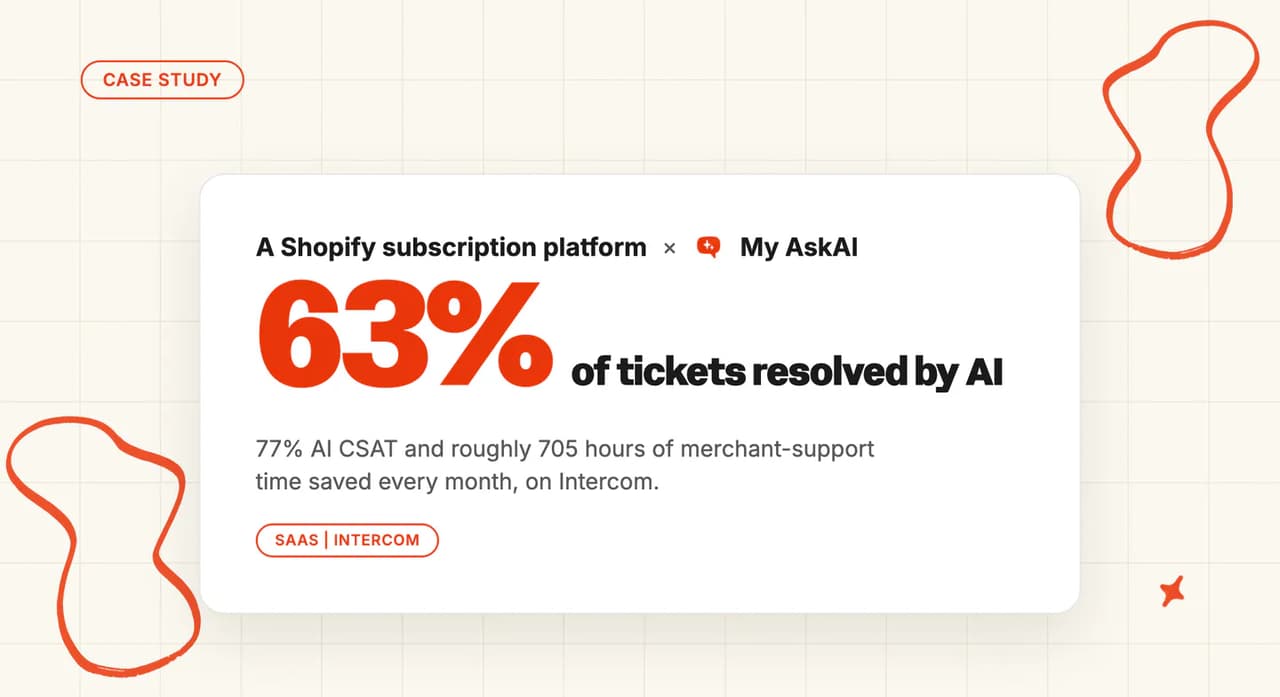
A Shopify subscription platform, also on Intercom, resolves 63% of its roughly 2,200 tickets a month with us, using Guidance to decide what the AI answers and what goes to the team. A digital-goods marketplace uses a named Task for each common ticket type, and its twelve live Tasks cover at least 68% of its tickets. Where a person has to act, the Task gathers what the team needs and hands over.
What does My AskAI cost at 500 cancellation requests a month?
Pro is our lowest plan, at $199 a month with 1,000 credits included, then $0.12 a credit, and every core feature (Tasks included) is available on it. I've assumed 60% of cancellations arrive by chat and 40% by email. A chat cancellation with six AI replies uses 3 credits, and an email with a first reply and two follow-ups uses 2. So 500 cancellations use 1,300 credits: $199 plus 300 extra credits at $0.12, or $235.
Tasks are billed at $0.02 a step on top, and counting every AI reply in a cancellation as a Task step adds 2,400 steps, or $48. Cost scores 9: 500 cancellations come to about $283 a month, roughly $0.57 each. The price per cancellation request is the same whether the AI finishes it or hands it over. Our 30-day free trial unlocks every feature with unlimited tickets and no card, so you can prove it on real cancellation requests before you pay.
For more on My AskAI, see our Tasks and Tools page, our User Data page and our pricing page.
Can Gorgias AI Agent automate subscription cancellations?
Gorgias is a helpdesk built for ecommerce, and AI Agent is its built-in AI, so using it means running your support in Gorgias. Its subscription actions for Recharge are the most complete cancellation conversation in this set, with matching actions for Loop Subscriptions and Skio.
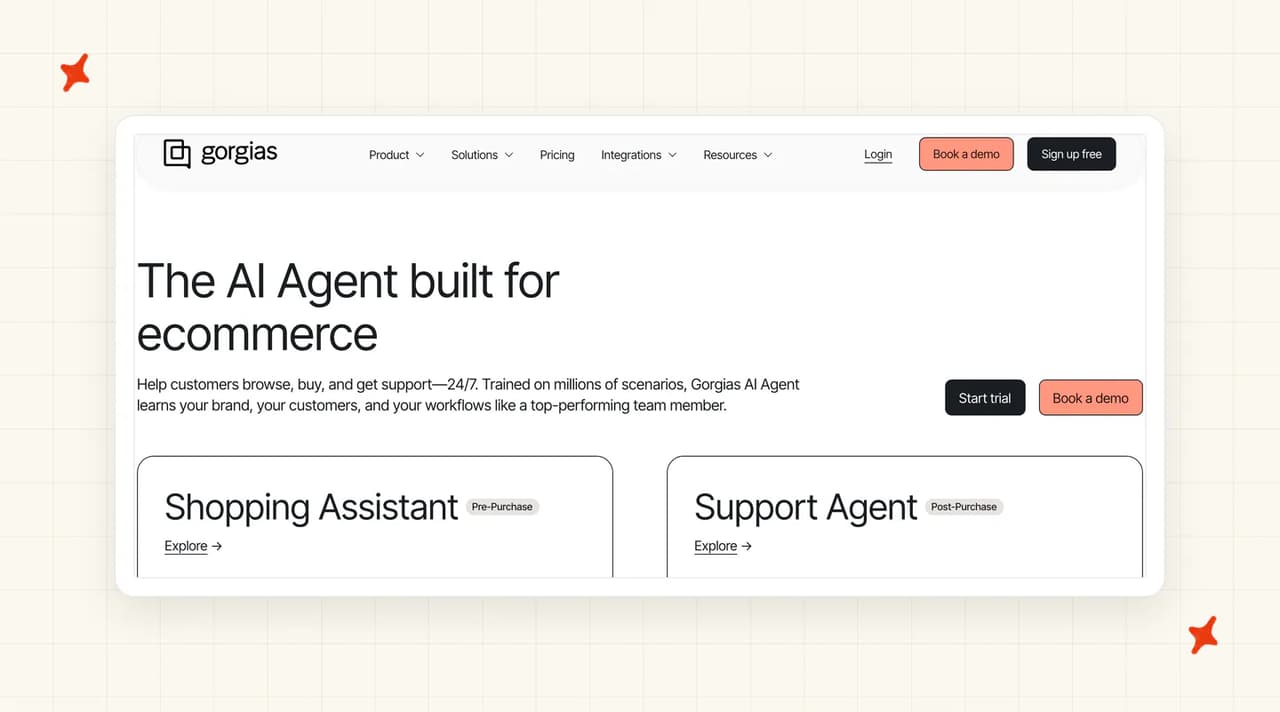
How does Gorgias AI Agent handle a cancellation end to end?
AI Agent starts by looking up the shopper's current subscription, including the product, price, next charge date, billing frequency and status. Where the shopper has a single subscription, it collects the reason for canceling before it goes further. Built-in reason collection is why Gorgias gets the only 8 on asking why (its docs don't say where the reason is saved).
A pause is offered as the alternative to canceling, and Gorgias turns on customer confirmation automatically for irreversible actions, so if the shopper declines, nothing runs. Offering the pause and stopping at a no earns an 8, joint top with Sierra. AI Agent then cancels the subscription and emails the shopper a confirmation. Confirming what happens next scores 8, because the action log records when each action ran and whether it worked.
Canceling scores 7 because most of the Recharge actions only run when the shopper has a single active subscription, and with more than one, AI Agent hands the ticket to your team to process. I think that's the right default, because it avoids failure mode 3 above, even if the AI finishes fewer cancellations on its own.
Gorgias shares the top handover score of 9 with us, because AI Agent always hands over when it detects anger or frustration, gets an explicit request for a person, or spots a sensitive topic. You can add topics such as billing disputes.
Setup is a 7, the best in the set (if Gorgias is already connected to Recharge, there are no extra steps before the subscription actions work). AI Agent does need a Shopify store connected to Gorgias. It doesn't support stores on other platforms such as BigCommerce, Magento or WooCommerce.
Capabilities shipped (out of 6)
Gorgias AI Agent covers the six jobs as follows:
| Job | Gorgias AI Agent |
|---|---|
| Sees plan and billing | ✅ subscription, price, next charge date |
| Asks why and records it | ✅ collects the reason before canceling |
| One fair offer, then lets go | ✅ pause offered; a decline means no action |
| Cancels it in billing | ✅ cancels in Recharge, Loop or Skio; one subscription at a time |
| Confirms what happens next | ✅ confirmation email and action log |
| Hands hard cases to a person | ✅ always-on triggers plus topics you add |
Who's using Gorgias AI Agent for subscription cancellations?
Gorgias's published customer stories don't single out subscription cancellations. Its Recharge, Loop and Skio action pages linked above set out what the AI does at each step (a trial is the quickest way to check them against your store).
What does Gorgias AI Agent cost at 500 cancellation requests a month?
On Gorgias pricing, subscription actions aren't on the Starter plan, so the lowest plan that runs them is Basic, at $90 a month billed monthly. Basic's $90 is $60 for the helpdesk and $30 for AI Agent, which includes 30 automated interactions, and each one above that costs $0.90.
Counting only the AI side, 500 cancellations means 470 extra interactions at $0.90, or $423. Add the $30 AI Agent charge and the $50 step up from Starter's helpdesk to Basic's, and it comes to $503 a month, about $1.01 a cancellation. Your Gorgias helpdesk charges come on top, but you'd pay those with or without the AI. Gorgias gets a 6 on cost, since $503 is cheaper than Zendesk's resolutions at this volume but almost double our figure.
For more on Gorgias AI Agent, read our complete guide to it, browse the Gorgias AI alternatives roundup or see our My AskAI vs Gorgias comparison.
Can Intercom Fin automate subscription cancellations?
Fin is Intercom's AI agent, and its pricing is per outcome. It's built into Intercom and also works with Salesforce, HubSpot and Freshdesk, handing conversations to your team in the inbox they already use.
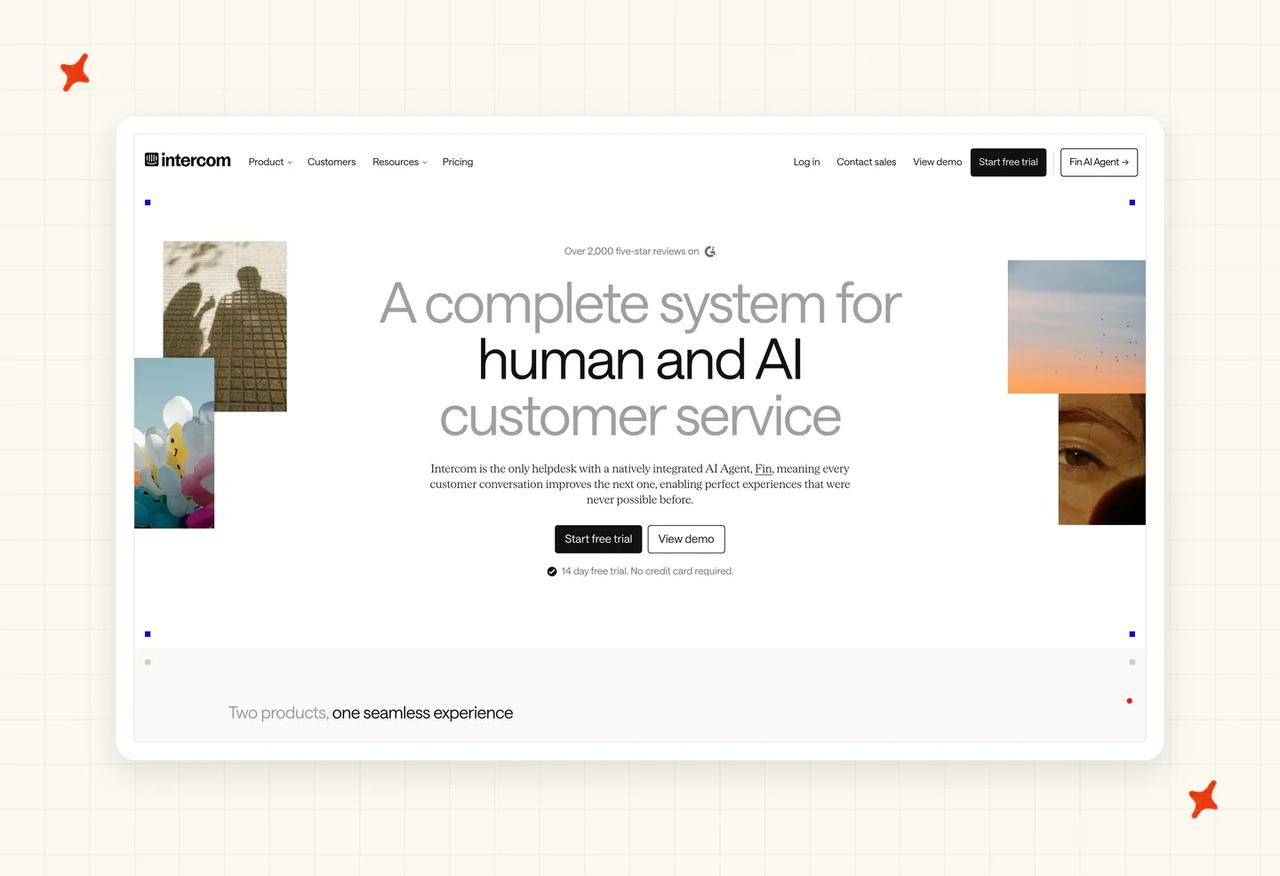
How does Intercom Fin handle a cancellation end to end?
Fin handles multi-step jobs through Procedures, and one of the ready-made templates is "Cancel or pause a subscription". Its data connectors can read what plan the user is on and cancel the subscription in your billing system, so seeing the plan and canceling in billing both score 8. Before it reads account details, Fin can check the customer with an emailed one-time code. I like that for cancellations arriving by email, where there's no signed-in chat to lean on.
The offer scores 7. The template gives you the cancel-or-pause choice to start from, and Intercom suggests an internal eligibility article to help Fin decide who qualifies for a discount. Asking why scores 5, because Intercom's published Procedure examples don't include a reason step, so recording why a customer leaves is a step you add yourself (as it is with us).
Confirming what happens next is a 7. A Procedure can pause for a teammate's decision before a cancellation goes through, then carry on. The pages don't show a confirmation message to the customer as a built-in step. Handover scores 8, because escalation guidance lets you branch on topics such as plan cancellations and send them to your team.
Setup is a 6, the same as ours. The template is a quick start, but the connectors to your billing system are built by your team, so plan for a developer's time on that part.
Capabilities shipped (out of 6)
Set against the six jobs, Fin looks like this:
| Job | Intercom Fin |
|---|---|
| Sees plan and billing | ✅ reads the user's plan through a connector |
| Asks why and records it | ⚠️ no reason step in the published Procedures |
| One fair offer, then lets go | ✅ cancel-or-pause template; discount eligibility |
| Cancels it in billing | ✅ cancels in your billing system |
| Confirms what happens next | ✅ teammate sign-off inside the Procedure |
| Hands hard cases to a person | ✅ escalation rules that branch on plan cancellations |
Who's using Intercom Fin for subscription cancellations?
Rocket Money, the personal finance app that manages subscriptions for its own users, uses Fin for requests like billing management, app troubleshooting and account access. Billing management is the closest match to cancellations in Fin's published customers.
What does Intercom Fin cost at 500 cancellation requests a month?
Fin costs $0.99 per outcome, and a Procedure that ends in a handoff you've configured counts as an outcome (so handed-over cancellations cost the same as finished ones). At 500 cancellations that's $495 a month, $0.99 each, with Intercom seats on top. Running Fin on another helpdesk comes to the same $495, with a 50-outcome monthly minimum.
Fin's cost score is 7: the bill is under half the no-AI cost, but it rises with every cancellation Fin finishes or hands over.
For more on Intercom Fin, read our complete guide to Fin, browse the Intercom Fin alternatives roundup or see our My AskAI vs Intercom Fin comparison.
Can eesel AI automate subscription cancellations?
eesel AI adds an AI agent to the helpdesk you already run, such as Zendesk, Freshdesk, Intercom, Gorgias, HubSpot, Help Scout, Front or Salesforce, so your team keeps its inbox. Its billing connections are where cancellations happen.
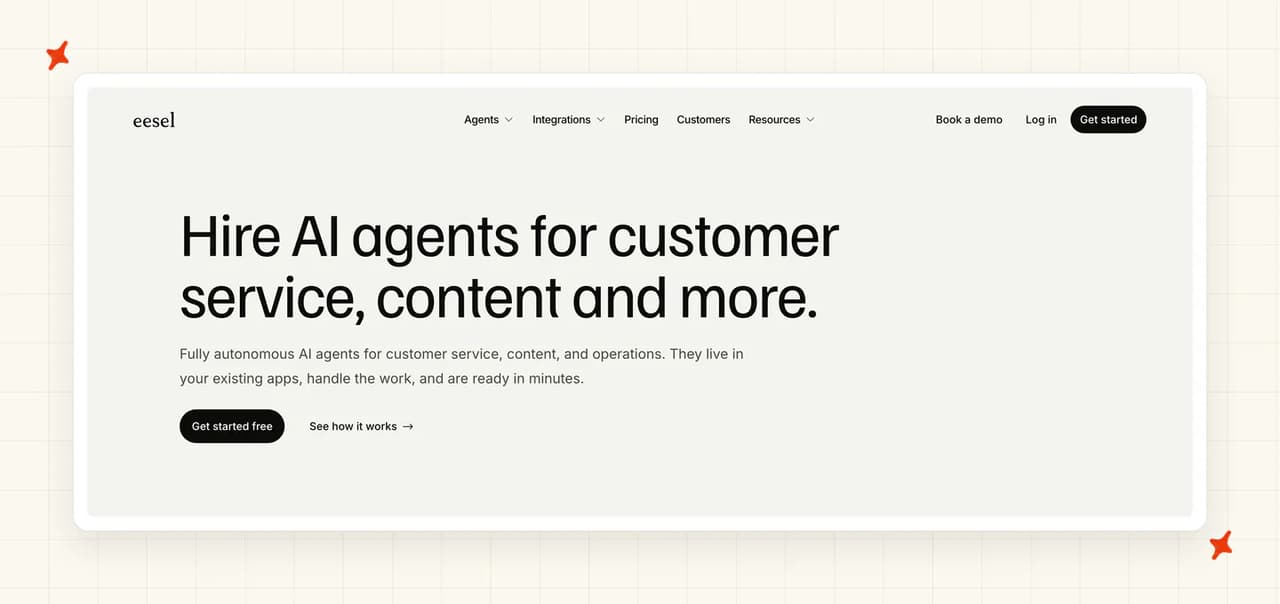
How does eesel AI handle a cancellation end to end?
Connected to Stripe, eesel reads a customer's invoices, payments and subscriptions, and a cancel stops future billing while the history stays. eesel gets 8s on both seeing the plan and canceling in billing. (The Recharge connection is switched on by eesel when you ask.)
Asking why scores 7: on Recharge, the cancel action saves the reason the agent records, and eesel's docs point out that it's what your retention team reads later. The offer scores 5: the agent can skip one charge or cancel, and for a pause or a date change it tells the customer what it can't do and hands the request to your team.
eesel recommends keeping refunds, cancellations and anything that costs money behind an approval, and its Activity page shows every action the agent took and who approved it. The customer-facing confirmation isn't a documented step, so confirming what happens next is a 7.
Handover gets a 6, because escalation is something you write into the agent's instructions, with a template line that sends customers who are upset, ask for a manager or mention canceling to your team, and the pages don't show an always-on trigger. Setup is a 6: before go-live, eesel can replay your past tickets and score its answers against what your team sent, though billing connections may need eesel's help to switch on.
Capabilities shipped (out of 6)
eesel AI scored as follows on each job:
| Job | eesel AI |
|---|---|
| Sees plan and billing | ✅ invoices, payments and subscriptions |
| Asks why and records it | ✅ reason saved with the cancellation |
| One fair offer, then lets go | ⚠️ skip or cancel; pauses go to your team |
| Cancels it in billing | ✅ cancel stops future billing |
| Confirms what happens next | ✅ Activity page and approval record |
| Hands hard cases to a person | ⚠️ written into instructions |
Who's using eesel AI for subscription cancellations?
Original Bootcamp uses eesel and sends cancellations, payments and health issues to its customer service team. That's a routing setup, where the AI passes cancellations to people, so it doesn't show eesel canceling subscriptions itself.
What does eesel AI cost at 500 cancellation requests a month?
On eesel's pricing, $299 a month buys 500 credits. I like that a ticket is one credit, however many replies it takes and whatever the agent does inside it. That means 500 cancellations fit the plan exactly, at about $0.60 each, with helpdesk seats on top.
At the cap the agent pauses, unless you turn on overage at $0.80 per extra credit. Only our cost scores higher than eesel's 8, and a busy month here means paying for overage or moving up a plan.
For more on eesel AI, read our complete guide to eesel, browse the eesel AI alternatives roundup or see our My AskAI vs eesel AI comparison.
Can Fini automate subscription cancellations?
Fini is an AI agent aimed at fintech and subscription businesses. It connects to the helpdesk you already run, such as Zendesk, Intercom, Salesforce, HubSpot, Freshdesk or Gorgias, so your team keeps its inbox. Its integrations page also names Stripe and Recurly among the billing tools it connects to.
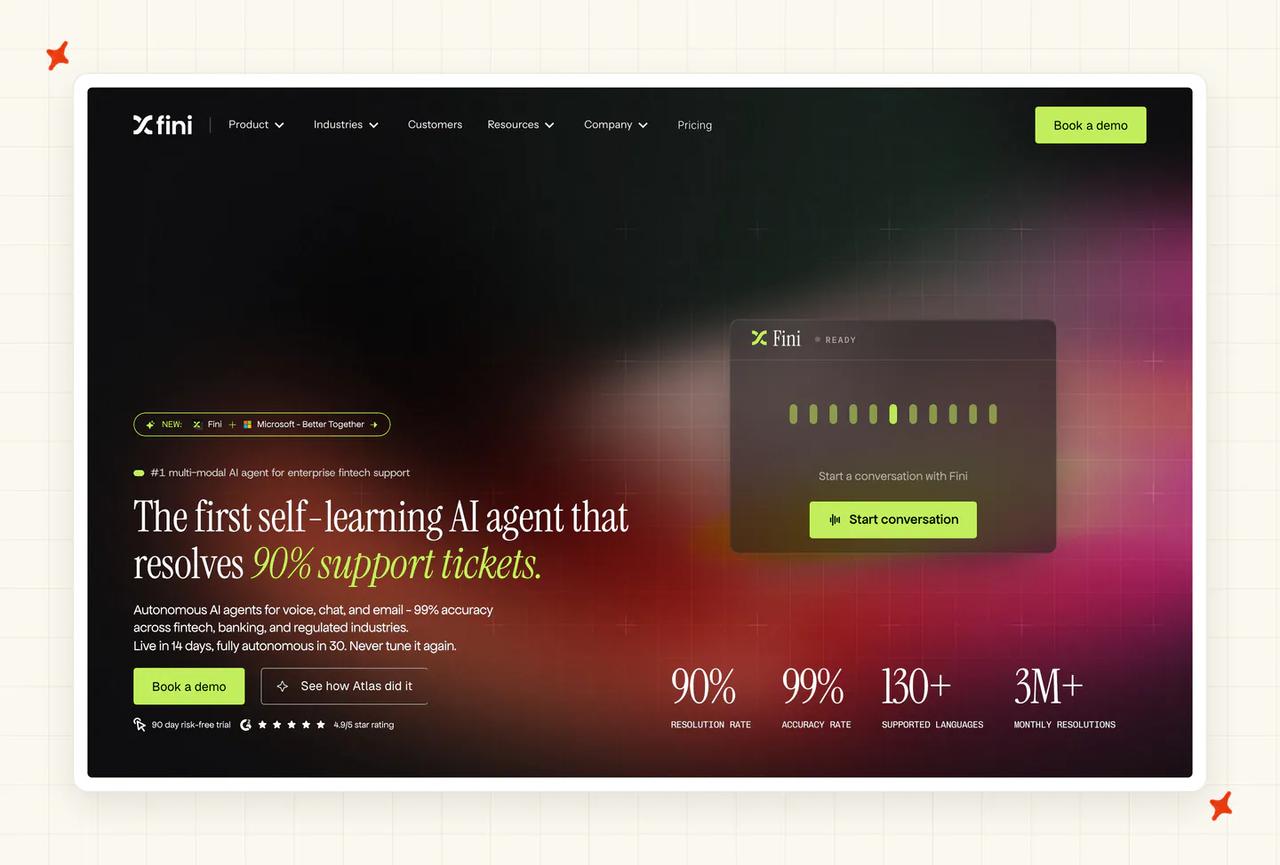
How does Fini handle a cancellation end to end?
Fini's actions documentation uses a cancellation as its main worked example:
- the customer says they want to cancel
- a rule matches the request
- the action cancels the plan in your billing system
- a reply confirms it to the customer
Fini gets the only 9 on canceling in billing because the action includes the date the cancellation takes effect (typically the next billing date).
Separately from the action, Fini can pull the customer's plan and recent orders fresh on every message, so seeing the plan scores 8. Asking why scores 6, because the documented action only records a reason if the customer volunteers one (Fini's docs advise against pushing for it). The offer is a 5: the documented cancel goes straight from the request to the cancellation, with no offer step in it.
Confirming what happens next scores 8: every action is logged with the data pulled, the policy applied and the step taken, and reply rules let you choose between a direct reply, an internal comment or no reply. Handover scores 7, because Fini escalates with full context (its pages don't name disputes or chargebacks as triggers). Setup scores 6: Fini says customers go live in 14 days and are fully autonomous in 30.
Capabilities shipped (out of 6)
On the six jobs, Fini covers this much:
| Job | Fini |
|---|---|
| Sees plan and billing | ✅ plan and recent orders, fresh each message |
| Asks why and records it | ⚠️ reason only if the customer volunteers it |
| One fair offer, then lets go | ⚠️ documented cancel has no offer step |
| Cancels it in billing | ✅ cancel action with the date it takes effect |
| Confirms what happens next | ✅ every action logged; reply to the customer |
| Hands hard cases to a person | ✅ escalates with full context |
Who's using Fini for subscription cancellations?
Peaksware is a Fini customer. Its case study says "Most tickets weren't complex, subscription cancellations, coach additions, basic questions, but the sheer volume across two different products was crushing."
I think it's the strongest customer proof in this set, because the AI cancels subscriptions itself: Fini "could execute cancellations, coach swaps, account changes, and prorate adjustments directly."
What does Fini cost at 500 cancellation requests a month?
Fini's pricing page puts its lowest plan, Growth, at $0.89 per resolved ticket, with escalations to your team free. The plan covers the platform, setup and a monthly allowance of at least 2,000 resolved tickets, but the page gives no monthly plan price, so you can't work out the bill at 500 cancellations. Cost gets a 3, one above Sierra, whose pages give no rate at all.
Growth makes more sense if cancellations are one part of a larger volume Fini would handle, since the included tickets would then cover your other requests too.
For more on Fini, read our complete guide to Fini or browse the Fini alternatives roundup.
Can Sierra automate subscription cancellations?
Sierra builds customer-facing AI agents, and its technology industry page lists supporting users through plan changes or cancellation requests among its jobs.

Sierra is a separate agent that works across chat, email, voice and messaging apps, beside your helpdesk. Its Agent Studio page says it connects to contact centers through pre-built integrations, and the page names no helpdesk.
How does Sierra handle a cancellation end to end?
Seeing the plan scores 7: Sierra's agents connect to your CRM, billing platform and other systems. I gave the 8s in this row to vendors that show a specific read of the subscription, and Sierra's pages describe the connection in general terms. Canceling is a 7 for the same reason: plan changes and cancellation requests are listed, without detail on when a cancellation takes effect.
On the offer, Sierra ties Gorgias for the top score with an 8. Its cancellation demo shows an agent keeping a customer subscribed with a personalized offer, and brands such as Thrive Market test different offers against each other. The pages don't show a cap of one offer, so set that rule yourself. Asking why scores 6: Sierra describes its agents listening to concerns before surfacing offers, and recording the reason isn't shown.
Confirming what happens next scores 7: Insights shows the reasoning behind every agent action, including which systems it accessed. Handover scores 8, because Sierra generates a detailed summary for the person taking over (the same thing our handover does). Setup scores 4, because implementation is led with Sierra's team, and Singtel went live in less than 10 weeks.
Capabilities shipped (out of 6)
Across the six jobs, Sierra scores like this:
| Job | Sierra |
|---|---|
| Sees plan and billing | ✅ connects to your billing platform |
| Asks why and records it | ⚠️ listens to concerns; recording not shown |
| One fair offer, then lets go | ✅ personalized offers you can test |
| Cancels it in billing | ✅ plan changes and cancellation requests |
| Confirms what happens next | ✅ reasoning behind every action |
| Hands hard cases to a person | ✅ handoff with a detailed summary |
Who's using Sierra for subscription cancellations?
Sierra says Madison Reed cut subscription cancellations in half for customers working with its agent. SiriusXM's agent handles subscription management alongside technical troubleshooting and content recommendations. Both are large consumer subscription brands. I think Sierra is built for businesses like them.
What does Sierra cost at 500 cancellation requests a month?
Sierra uses outcome-based pricing tied to results such as a resolved conversation or a saved cancellation, so you'd pay for customers the AI keeps as well as for requests it resolves. With no rate on that post or Sierra's product page, you can't work out the bill at 500 cancellations, so cost gets a 2, the lowest in the set.
For more on Sierra, read our complete guide to Sierra, browse the Sierra alternatives roundup or see our My AskAI vs Sierra comparison.
Can Zendesk AI agents automate subscription cancellations?
Zendesk AI agents are the AI built into Zendesk, so for a team already on Zendesk they're the obvious first option to check (My AskAI works inside Zendesk too).
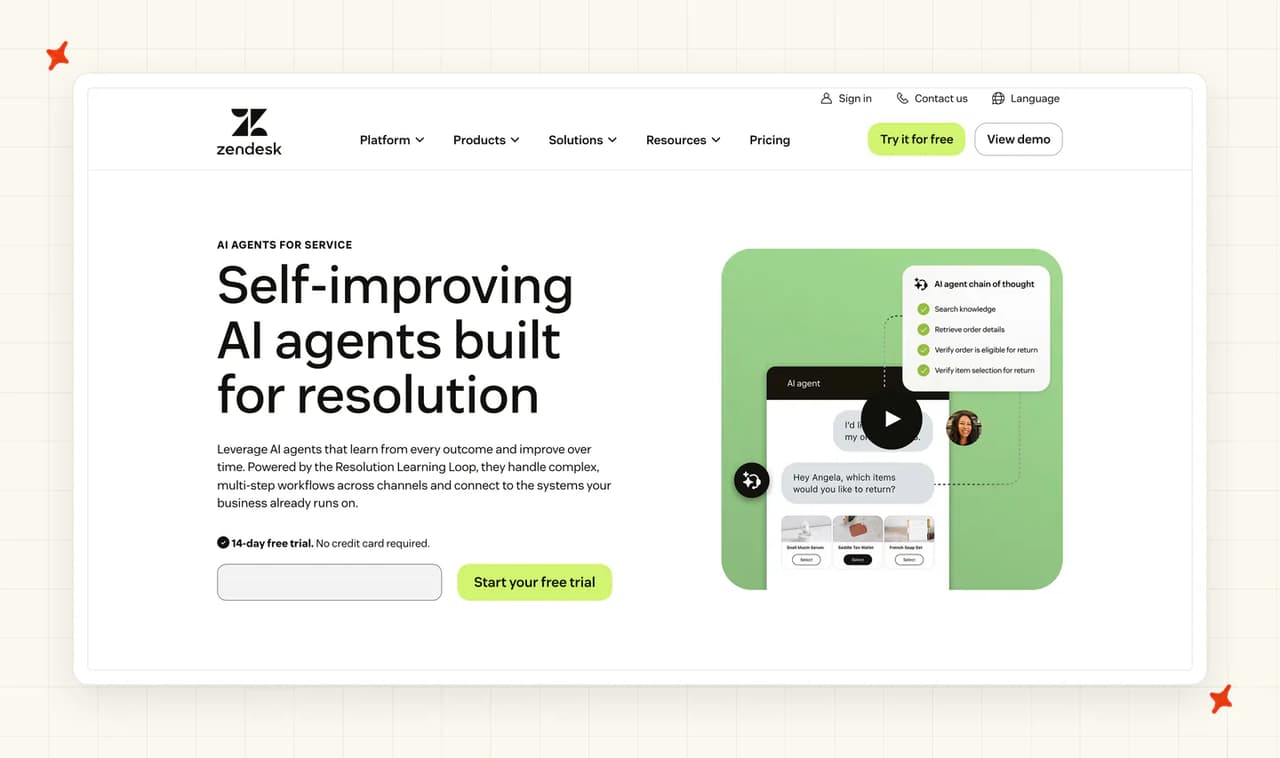
How do Zendesk AI agents handle a cancellation end to end?
Zendesk's custom actions update data outside Zendesk, and an AI agent can run the action flows your team builds. That's how it reads a subscription and cancels it, and both rows score 7 because your team builds every action flow first.
Asking why and the offer both score 5. The actions are general-purpose, and none of Zendesk's published examples is a reason question or a retention offer, so you'd design both yourself. Confirming what happens next scores 7, because conversation logs let your team inspect messages and actions afterwards.
Handover scores 7: the AI agent hands off when an inquiry is complex, urgent or sensitive, and a summary on handover isn't described in the pages. Setup is a 5, one below ours, since every action is built in the action builder by your team.
Capabilities shipped (out of 6)
For Zendesk AI agents, the six jobs come out like this:
| Job | Zendesk AI agents |
|---|---|
| Sees plan and billing | ✅ custom actions read your systems |
| Asks why and records it | ⚠️ no reason step in the published examples |
| One fair offer, then lets go | ⚠️ no offer step in the published examples |
| Cancels it in billing | ✅ action flows the AI can run |
| Confirms what happens next | ✅ conversation logs show actions |
| Hands hard cases to a person | ✅ hands off complex or sensitive cases |
Who's using Zendesk AI agents for subscription cancellations?
On Zendesk's AI agents page, Babbel says its AI agents let users manage their subscriptions completely by themselves, connected to Babbel's systems.
What do Zendesk AI agents cost at 500 cancellation requests a month?
On Zendesk pricing, Suite Team is $69 an agent a month billed monthly and includes 5 automated resolutions per agent. With five agents that's 25 included, and the other 475 cost $2.00 each on pay-as-you-go, or $950 a month, about $1.90 a cancellation. (The Suite seats themselves are the helpdesk you'd pay for anyway.)
That makes Zendesk's cost a 5: it's the highest published AI bill in the set, and it rises with every cancellation the AI resolves.
For more on Zendesk AI agents, read our complete guide to the Zendesk AI agent, browse the Zendesk AI alternatives roundup or see our My AskAI vs Zendesk AI agent comparison.
What does automating subscription cancellations save you? (worked example)
I've used the same basis for every row: 500 cancellation requests a month, 60% by chat and 40% by email, and five minutes of team time per cancellation at a loaded cost of $0.40 a minute. Five minutes assumes your team already uses AI to look up the subscription and draft the reply. With the median wage for customer service representatives at $21.53 an hour, $0.40 a minute allows for overheads. Each row is the lowest plan that covers the volume, and for AI built into a helpdesk I've counted the AI charge plus any plan upgrade the AI needs.
| Scenario | Plan priced | Monthly cost | Effective $/cancellation | Notes |
|---|---|---|---|---|
| No AI (your team handles every cancellation) | None | $1,000 | $2.00 | 500 cancellations × 5 minutes × $0.40 a minute |
| My AskAI | Pro | ~$283 | ~$0.57 | $199 + 300 extra credits × $0.12 = $235, plus 2,400 Task steps × $0.02 = $48; 30-day free trial |
| Gorgias AI Agent | Basic | $503 | $1.01 | $30 AI Agent + 470 extra AI interactions × $0.90 = $453, plus $50 to move the helpdesk from Starter to Basic; helpdesk tickets on top |
| Intercom Fin | Fin, per outcome | $495 | $0.99 | 500 outcomes × $0.99, handoffs included; Intercom seats on top |
| eesel AI | 500 credits | $299 | $0.60 | Exactly at the credit cap; $0.80 per extra credit; helpdesk seats on top |
| Fini | Growth | Not shown | Not shown | $0.89 per resolved ticket; no plan price on Fini's pricing page |
| Sierra | Outcome-based | Not shown | Not shown | No rate on Sierra's pricing post or product page |
| Zendesk AI agents | Suite Team plus automated resolutions | $950 | $1.90 | 475 resolutions × $2.00 after 25 included (5 agents); Suite seats on top |
Against the no-AI row, My AskAI saves about $717 a month, eesel AI about $701 and Intercom Fin about $505. Gorgias AI Agent saves $497 and Zendesk AI agents $50. Fini's Growth plan includes at least 2,000 resolved tickets a month, so it makes more sense where cancellations are a small part of a bigger volume.
Our Task steps and Tools are billed on top of credits on every plan, so the Task steps are counted in our row. Our ROI calculator runs the same sums on your own volume.
So which AI customer service agent is best for subscription cancellations?
Gorgias AI Agent tops the scoreboard on 61 because its subscription actions cover every job out of the box, from the reason question to the pause offer to the automatic handover. It's built for Shopify stores, so it fits a subscription-box brand selling through Shopify with Recharge, Loop or Skio. Customers with more than one subscription get handed to your team.
My AskAI is second on 59. For most subscription businesses outside Shopify, it's where I'd start: it works inside Zendesk, Intercom, Freshdesk, Freshchat, Gorgias or HubSpot, reads the plan from your systems, and costs about $283 a month for 500 cancellation requests. The reason question and the offer are steps you write into the cancellation Task, so write them around the offers your team already makes by hand.
Intercom Fin (56) has a cancel-or-pause template and a teammate sign-off step, and eesel AI (55) suits teams that want every cancellation behind an approval. Fini has the most precise cancel action but gives no monthly plan price, and Sierra suits a large consumer brand that wants to test offers. If cancellations are a small share of your tickets, keeping them with your team and letting the AI answer the lookups first is a sensible place to start.
Letting an AI change what a customer pays takes trust, so whichever tool you choose, roll cancellations out in stages:
- Start with drafts - the AI drafts every cancellation reply and proposed action as an internal note for your team to check before any customer sees it. With us, internal-note drafts are the default setting.
- Let it finish the simplest cancellations first - a monthly plan, one subscription, no dispute and no refund asked for.
- Keep the offer and the cancel on approval - both wait for a teammate until you trust them, then move to automatic one at a time.
- Keep hard cases with people - disputes and chargebacks always go to your team.
If you want to try this on real cancellation requests, our 30-day free trial gives you every feature with no card.
FAQs
What is a cancellation flow?
A cancellation flow is the series of steps a customer goes through between asking to cancel and a confirmed cancellation. It usually includes a question about why they're leaving, an offer that fits the reason, the cancellation itself and a confirmation. Many businesses build it as a screen in the app or customer portal.
Can an AI agent actually cancel a subscription, or only route the request to a person?
It can cancel, if it's connected to the system that bills the customer. In this set, Gorgias AI Agent cancels in Recharge, Loop or Skio, Fini and eesel AI document cancel actions, Intercom Fin cancels through a connector, and My AskAI cancels through your billing system with a Task. We let you choose, per action, whether a teammate approves each cancellation before it goes through, and Intercom Fin and eesel AI offer an approval step too.
Can an AI agent pick up the customer's mood and make a retention offer before canceling?
Yes, and they're separate settings. Gorgias AI Agent and My AskAI hand frustrated customers to a person, and the offer itself is a rule you set: a pause in Gorgias, a Task step in My AskAI, or offers you test against each other in Sierra. My advice is to keep it to one offer, and cancel if the customer still says no.
Can AI customer service agents process cancellations and subscription changes?
Yes. Gorgias AI Agent can pause, skip and cancel subscriptions, eesel AI can skip a charge or cancel, and Intercom Fin's template covers canceling or pausing. With us, a cancellation and a plan change are each a Task you set up to act through your billing system, and a plan-change Task can work out the prorated charge before switching the plan.
Can an AI agent cancel an order before it ships?
Yes, as long as the order hasn't shipped, though that's a different job from canceling a subscription. Richpanel has ready cancel actions for Shopify, Gorgias AI Agent offers them on Basic and up, and with us a cancellation is a Task your team sets up. Our roundup of AI for order tracking scores tools on order changes.
What should always go to a person in a cancellation?
Disputed charges and chargebacks, refund demands outside your policy, a customer with more than one subscription, anyone upset and anyone who asks for a person. Set these as topic rules so the AI hands them over straight away, with a summary of the conversation so far. A customer who has already turned down one offer should have the cancellation go through, with no second offer.
Which AI agents can cancel a subscription in Stripe after making a retention offer?
In this set, eesel AI and Fini connect to Stripe. eesel reads a customer's invoices, payments and subscriptions there, and its cancel stops future billing while the history stays. It can skip a charge instead of canceling, but it has no documented discount action, and it hands a pause to your team. Fini names Stripe and Recurly among its billing connections, and its documented cancel returns the date the cancellation takes effect, with no offer step in it.
With us, the cancellation is a Task. The offer is a step you write (a pause for monthly customers, say), and Tools connect the Task to your billing system so the AI cancels there if the customer still says no. Connecting Tools usually needs a developer for that one step. Gorgias AI Agent cancels in Recharge, Loop or Skio rather than Stripe.